The 2026 living wage for Brooks has dropped to $20.60 an hour — a decrease of 6.36 per cent from last year's $22 — after food and shelter costs fell enough to outweigh a 25 per cent jump in provincial fuel prices, city staff told Monday's Brooks city council meeting.

Lisa Tiffin, Director of Planning and Community Development for the City of Brooks, presented the annual living wage calculation, released province-wide on Monday as part of Living Wage Week. She said she believed the figure places Brooks third lowest among all participating Alberta communities.

0:00
/0:00

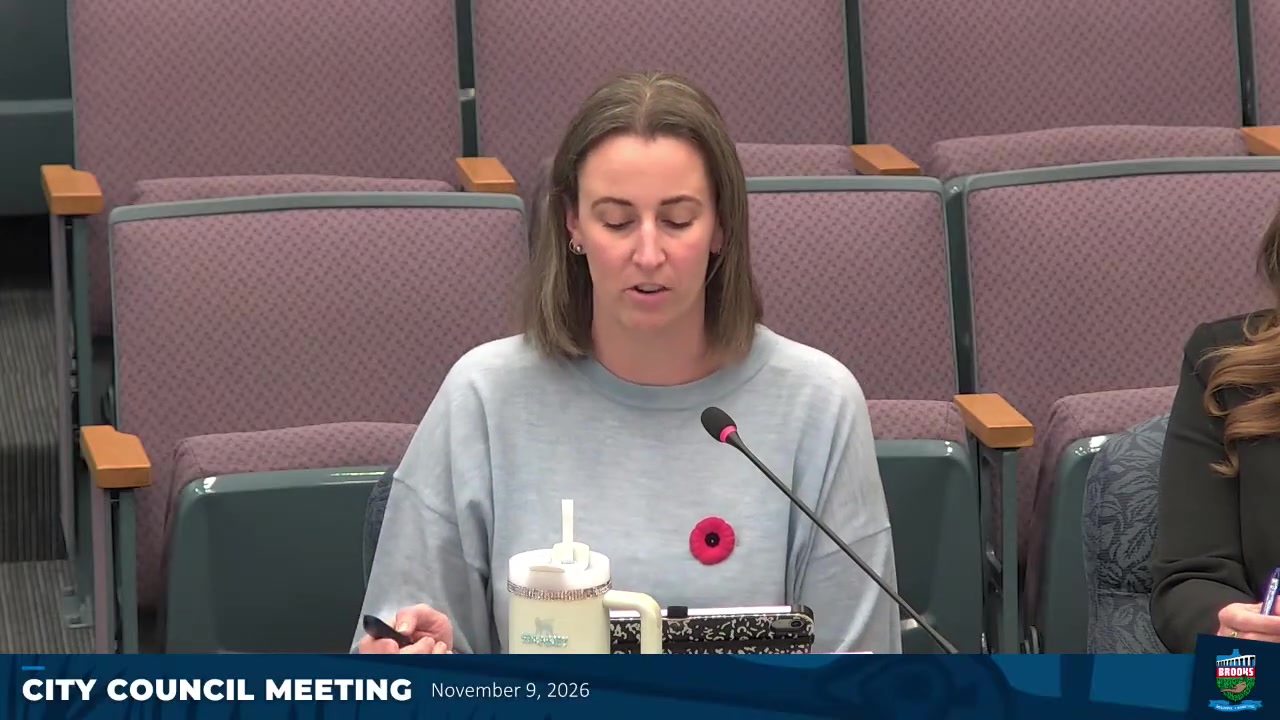
Lisa Tiffin, Director of Planning and Community Development for the City of Brooks, announces the 2026 living wage figure to city council. (City of Brooks video)

"The 2026 living wage for all participating communities across Alberta was released today," Tiffin said during Monday's council meeting. "Drum roll. And for the City of Brooks, it is $20.60. So this does represent a slight decrease from last year's figure. Brooks does still remain near the lowest end of all of the living wages calculated across Alberta. I think that we are the 3rd lowest."

Food costs in Brooks fell 4.2 per cent — a drop of $462 a year — while shelter costs, which make up the single largest share of the living wage calculation at 31 per cent, fell 1.2 per cent, Tiffin said. Shelter costs are drawn from Canada Mortgage and Housing Corporation rent data for three housing types, combined with electricity and tenant insurance figures.

Transportation costs moved in the opposite direction, rising 7.2 per cent or $672 a year, Tiffin said. She attributed the increase primarily to fuel prices, which rose an average of 25 per cent across Alberta in 2026 — 26.6 per cent in Calgary and 24.5 per cent in Edmonton — along with a provincial rate cap change that allowed vehicle insurance premiums for drivers with clean records to rise approximately 7.5 per cent.

Changes to federal government benefits also pushed the Brooks figure downward this year. Tiffin said the GST rebate was replaced by a Canada Groceries and Essential Benefits program paying 25 per cent more, combined with a Canada Workers Benefit. Because Brooks has a relatively low living wage, earners there are eligible for more government support, which reduces the wage needed to cover household costs — an effect that did not apply to higher-cost cities such as Calgary, St. Albert and Banff, where living wage earners earn too much to qualify for those benefits.

The living wage is calculated by the Alberta Living Wage Network using a standard methodology that averages costs across three household types: a dual-parent family with two children, a lone parent with one child, and a single individual. The costs for a lone-parent household in Brooks came to $18,850 a year; for a single individual, just over $16,000. Nine spending categories are included: food, clothing and footwear, shelter, transportation, childcare, healthcare, tuition and school fees, other household costs, and a contingency amount equal to two weeks' pay.

At Alberta's $15-an-hour minimum wage, a full-time worker in Brooks covers only 73 per cent of basic household costs, Tiffin said. Brooks currently has two living wage employers — Newell Housing Association and the SPEC Association — both nonprofits.

Tiffin said the figures show Brooks is a very affordable community compared to others across Alberta, B.C. and Ontario. "Ontario released their living wages today as well as part of Living Wage Network or the Living Wage Week, and there is not one community in all of Ontario that reported their living wage that is as affordable as Brooks is," she said during Monday's meeting.

The 2026 figure, while lower than last year, remains above the $18.25 recorded in 2024 and the $19.05 figure from 2023, when Brooks first joined the provincial calculation. Tiffin asked council to accept the report as information. The deputy mayor, who chaired the meeting in Mayor Norm Gerestein's absence, said the decrease came as a surprise. "I'm not sure about the rest of council, but I'm somewhat shocked that we were actually at the downward side of the living wage and that it actually decreased," the deputy mayor said. "Seems like everything's getting way more expensive every day."

Council accepted the living wage report as information. The Alberta Living Wage Network's full provincial results are available through the network's website.

Watch the full meeting:

Share this article
The link has been copied!