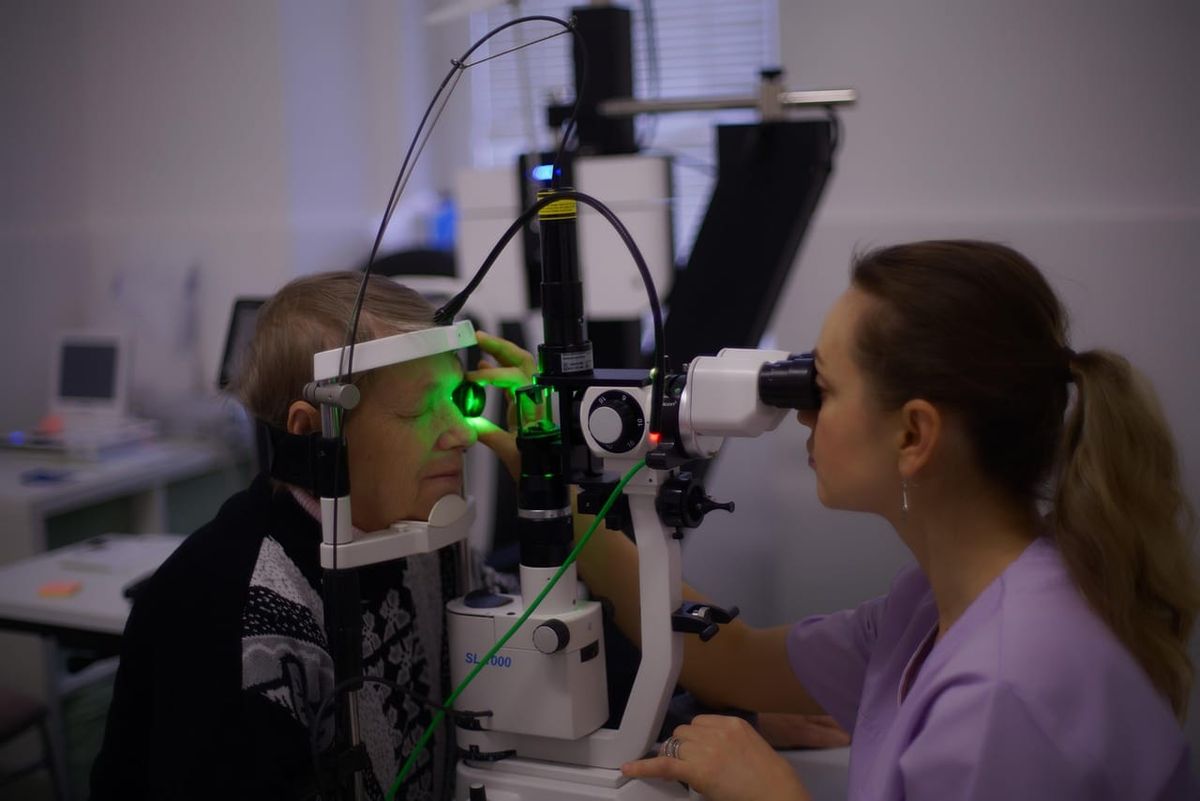
The expanded services will include removal of benign skin lesions, treatment of styes, and three laser procedures: peripheral iridotomy, selective laser trabeculoplasty and Nd:YAG capsulotomy. Only optometrists who complete approved education, examinations and clinical supervision will be authorized to offer the services.
Justin Wright, Minister of Primary and Preventative Health Services and MLA for Cypress-Medicine Hat, said the change is designed to reduce travel and wait times, particularly for people in rural and remote communities.
"Albertans deserve timely access to the care they need," Wright said. "Getting the right care shouldn't mean travelling hours or waiting longer than necessary for a procedure a qualified health professional can safely provide closer to home."
Wright made the announcement at a news conference Monday, where he said the reform is part of what he described as the largest scope of practice review in the province's history. He said 26 of 28 provincial medical colleges have submitted requests for scope of practice review or expansions.
"This is not a blanket permission where every optometrist will be able to perform these procedures," Wright said at the press conference, broadcast live on YouTube. "Only optometrists who have completed the additional education, examination, supervised clinical experiences, and received the required regulatory authorization will be able to perform these advanced procedures independently."
Wright posted about the announcement on X before the news conference.
Better access to eye care, closer to home.
— Justin Wright (@real_jtwright) October 26, 2026
Tune in live as our government announces new ways optometrists can improve eye health across Alberta https://t.co/86HYeg65ZS
The Alberta College of Optometrists will establish standards of practice and oversee implementation. Dr. Michelle Duke, president of the college, said the announcement builds on years of work between her organization and government.
"This announcement builds on years of collaboration between the college and government to modernize how eye care is delivered and to improve access for patients," Duke said. "Our high standards of oversight will continue as optometrists deliver care closer to home, which will increase system capacity, reduce delays and improve patient outcomes."
Dr. Sophia Leung, president of the Alberta Association of Optometrists, said the profession has the training to deliver the expanded services safely.
"As a clinician and educator with firsthand experience performing these procedures, I know the difference they can make for patients," Leung said. "This is a milestone for our profession and for Albertans seeking timely eye care."
The government said the changes will also allow ophthalmologists to concentrate on more complex cases. Ophthalmologists will continue to provide the same procedures in the meantime.
Wright cautioned that the services will not be immediately available everywhere, as optometrists must first complete training, obtain authorization and invest in specialized equipment before offering the procedures.
The Alberta College of Optometrists will oversee the rollout beginning Nov. 1.